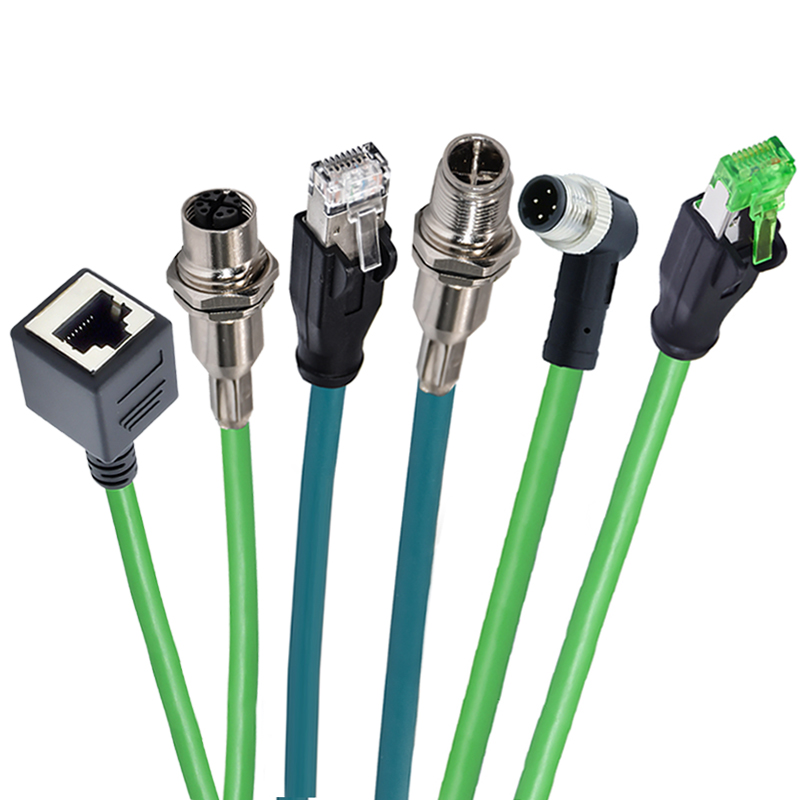
In the rapidly evolving world of industrial automation, the necessity for robust, reliable, and efficient connectivity solutions has never been more paramount. Enter the M12 connector – a versatile, resilient, and standardized connector that has become the cornerstone for various applications across multiple industries.
Since their inception, M12 connectors have significantly evolved. Initially used for sensor and actuator connectivity in factory automation, they have grown to serve various functions, including data, power, and signal transmission in harsh environments. This evolution is driven by advancements in technology and the increasing demand for more compact, durable, and higher performance connectors.
Technical Specifications and Variants
M12 connectors are characterized by their circular shape and 12mm locking thread. These connectors come in various coding types and pin configurations to cater to different industrial needs. The most common types include:
- A-coded: Typically used for sensor and actuator connectivity.
- B-coded: Designed for Profibus and Interbus networks.
- D-coded: Suited for Ethernet and PROFINET applications.
- X-coded: Supports high-speed data transfer up to 10 Gbps, making them ideal for contemporary data communications.
Each coding type and pin configuration ensures compatibility and optimal performance across diverse industrial environments.
Applications and Impact
The versatility of M12 connectors allows them to be deployed in numerous applications, such as factory automation, transportation, and outdoor surveillance systems. Their robust design provides excellent resistance to vibrations, dust, and moisture – critical factors in maintaining reliable connections in industrial settings.
In factory automation, M12 connectors streamline the connection between various sensors and actuators, ensuring seamless system operations. In transportation, they are used in control systems for trains and buses, while in surveillance systems, their reliability ensures uninterrupted data transmission for security cameras.
Future Prospects and Innovation
The future of M12 connectors looks promising, with ongoing innovations aimed at enhancing their capabilities. One emerging trend is the integration of M12 connectors with IoT devices. This integration will enable smarter and more connected industrial environments, leading to increased efficiency and productivity.
Moreover, the development of hybrid M12 connectors that can transmit both power and data through a single cable is set to revolutionize connectivity solutions, reducing cabling complexity and improving system scalability.
In conclusion, M12 connectors have established themselves as a critical component in industrial automation and beyond. Their evolution from simple sensor connections to comprehensive solutions for data, power, and signal transmission underscores their importance. As technology continues to advance, M12 connectors will undoubtedly evolve, catering to the ever-growing demands of industrial connectivity.
This in-depth report should provide industry practitioners with a comprehensive understanding of M12 connectors' evolution, technical specifications, applications, and future trends. If you need any adjustments or additional information, feel free to let me know!
Your email address will not be published.Required fields are marked. *